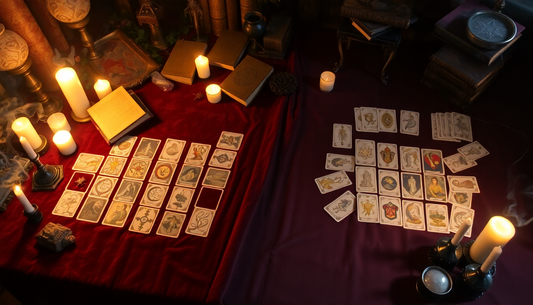
Tarot vs. Oracle Cards: What's the Difference?
When it comes to divination and spiritual guidance, two tools have captured the imagination of seekers worldwide: tarot cards and oracle cards. While both are used for similar purposes—gaining insight, clarity, and spiritual guidance—they are fundamentally different systems with distinct histories, structures, and approaches. Whether you're a curious beginner or someone looking to deepen your understanding of these mystical practices, understanding the differences between tarot and oracle cards is essential. This comprehensive guide will explore every aspect of these two powerful divination tools, helping you determine which might be right for your spiritual journey.
Understanding the Basics of Tarot Cards
Tarot is one of the oldest and most structured divination systems in existence. With roots tracing back to 15th-century Italy, tarot began as a card game before evolving into a powerful tool for spiritual insight and self-reflection. The traditional tarot deck consists of 78 cards, each with specific meanings, symbolism, and interpretations.
The Structure of a Tarot Deck
The 78 cards in a standard tarot deck are divided into two main sections: the Major Arcana and the Minor Arcana. The Major Arcana comprises 22 cards, numbered from 0 to 21, and represents significant life themes, spiritual lessons, and major turning points. Cards like The Fool, The Magician, The High Priestess, and The World tell a story of spiritual evolution and transformation.
The Minor Arcana consists of 56 cards divided into four suits: Wands, Cups, Swords, and Pentacles. Each suit contains 14 cards—ten numbered cards (Ace through Ten) and four court cards (Page, Knight, Queen, and King). These cards represent everyday situations, challenges, and experiences that shape our lives.
The Symbolism and Meaning in Tarot
Each tarot card carries rich symbolism and multiple layers of meaning. The imagery in tarot decks is intentional and deeply connected to numerology, astrology, Kabbalah, and various spiritual traditions. For example, The Magician represents manifestation and personal power, while The Hermit symbolizes introspection and spiritual seeking.
The beauty of tarot lies in its complexity. A single card can have different meanings depending on whether it appears upright or reversed, the position it occupies in a spread, and the surrounding cards. This complexity allows for nuanced readings that can address intricate life situations and provide detailed guidance.
Exploring Oracle Cards
Oracle cards represent a more modern and flexible approach to divination. While tarot has a long historical tradition, oracle cards emerged more recently and have evolved into a diverse category of divination tools. Unlike tarot, oracle cards don't follow a standardized structure, allowing creators to design decks based on various themes, philosophies, and spiritual traditions.
The Structure of Oracle Decks
Oracle decks vary significantly in size and structure. While some decks contain 40-50 cards, others may have 30 cards or over 60. There's no universal standard, which means each oracle deck is unique in its composition. This flexibility is one of the defining characteristics of oracle cards and appeals to many modern spiritual seekers.
Each oracle card typically features a single word or short phrase as its primary message, along with detailed artwork and accompanying guidebook explanations. The messages are usually more straightforward and direct compared to tarot, making oracle cards accessible to beginners and those seeking clear, uncomplicated guidance.
The Diversity of Oracle Decks
One of the most exciting aspects of oracle cards is the incredible diversity available. You'll find oracle decks focused on angels, goddesses, animals, crystals, chakras, affirmations, and virtually any spiritual theme imaginable. Some popular examples include the Angel Oracle Cards, the Goddess Oracle, the Animal Spirit Oracle, and countless others created by spiritual teachers and artists worldwide.
This diversity means you can choose an oracle deck that resonates with your personal beliefs, interests, and spiritual path. Whether you're drawn to nature-based spirituality, angelic guidance, or empowerment messages, there's likely an oracle deck designed specifically for your needs.
Key Differences Between Tarot and Oracle Cards
Understanding the fundamental differences between these two divination systems is crucial for anyone interested in using them. These differences affect how the cards are read, interpreted, and applied to your life.
Structure and Standardization
The most obvious difference is structure. Tarot follows a standardized format with 78 cards organized into specific categories. This consistency means that whether you're using the Rider-Waite deck, the Thoth deck, or any other tarot deck, the basic structure remains the same. You'll always have 22 Major Arcana cards and 56 Minor Arcana cards.
Oracle cards, conversely, have no standardized structure. Each deck is created independently with its own number of cards, themes, and organizational system. This lack of standardization makes oracle cards more flexible but also means you need to learn each deck's unique system individually.
Complexity and Depth
Tarot is inherently more complex. Each card has multiple meanings, and the relationship between cards creates additional layers of interpretation. The reversed position of a card can change its meaning significantly. The position of a card within a spread adds context and nuance. This complexity allows for deep, detailed readings that can address multifaceted situations.
Oracle cards are generally simpler and more straightforward. The messages are typically clear and direct, with less ambiguity. While this simplicity makes oracle cards more accessible to beginners, it can also limit the depth of interpretation for those seeking more nuanced guidance.
Reversals and Positions
In tarot reading, the orientation of a card matters significantly. A reversed card often carries a different meaning than an upright card. For example, the upright Two of Cups represents harmony and partnership, while the reversed Two of Cups might indicate conflict or disconnection. This adds another dimension to tarot interpretation.
Most oracle card readers don't use reversals, though some choose to incorporate them. The primary message of an oracle card typically remains consistent regardless of its orientation. This is another factor that makes oracle cards more straightforward and less complex than tarot.
Historical Background
Tarot has a rich, documented history spanning over 500 years. It evolved from a card game into a divination tool, with various traditions and schools of thought developing around it. This historical depth means tarot is steeped in tradition, symbolism, and established interpretive frameworks.
Oracle cards are a more recent development, gaining popularity primarily in the last few decades. While this means they lack the historical depth of tarot, it also means they're more adaptable to contemporary spiritual beliefs and modern life situations.
The Symbolism and Interpretation
Both tarot and oracle cards rely on symbolism, but they approach it differently.
Tarot Symbolism
Tarot symbolism is deeply rooted in various esoteric traditions. The Major Arcana follows the Hero's Journey, representing spiritual evolution and transformation. The Minor Arcana connects to elemental symbolism, numerology, and astrological associations. Understanding tarot requires learning these interconnected systems of meaning.
For instance, the suit of Wands is associated with fire, passion, creativity, and action. The suit of Cups relates to water, emotions, relationships, and intuition. Swords connect to air, intellect, conflict, and clarity. Pentacles represent earth, material matters, abundance, and practicality. These associations create a coherent system where meanings build upon each other.
Oracle Symbolism
Oracle card symbolism is more varied and depends entirely on the deck's theme and creator's vision. An angel oracle deck will use angelic symbolism and messages, while an animal oracle deck will draw on animal characteristics and spiritual meanings. A goddess oracle deck will incorporate mythology and feminine divine energy.
This flexibility means oracle cards can be tailored to specific spiritual traditions, belief systems, or life areas. You're not bound by centuries of established tradition but rather can choose decks that align with your personal spiritual path.
Choosing Between Tarot and Oracle Cards
Deciding whether to work with tarot, oracle cards, or both depends on your personal preferences, spiritual goals, and learning style.
Tarot is Ideal If You:
Want to develop a deep, comprehensive divination practice. Tarot's complexity and established framework provide a lifetime of learning and exploration. If you're committed to mastering a system, tarot offers the depth and structure to support that commitment.
Enjoy studying symbolism and esoteric traditions. If you're fascinated by astrology, numerology, Kabbalah, and other mystical systems, tarot's interconnected symbolism will appeal to you.
Prefer detailed, nuanced readings. When you need comprehensive guidance on complex situations, tarot's ability to provide layered, detailed interpretations is invaluable.
Want to follow an established tradition. If you appreciate working within a time-tested system with established meanings and interpretations, tarot provides that framework.
Oracle Cards are Ideal If You:
Are new to divination and want an accessible entry point. Oracle cards' straightforward messages and lack of complex reversals make them perfect for beginners.
Want flexibility and variety. If you enjoy exploring different themes and spiritual traditions, oracle cards offer endless variety and customization options.
Prefer clear, direct messages. When you need straightforward guidance without extensive interpretation, oracle cards deliver clear answers.
Want to align your practice with specific spiritual interests. Whether you're drawn to angels, animals, goddesses, or any other theme, there's likely an oracle deck perfectly suited to your interests.
Using Tarot and Oracle Cards Together
Many spiritual practitioners use both tarot and oracle cards, finding that they complement each other beautifully.
Combining the Systems
Some readers use tarot as their primary divination tool and oracle cards for clarification or additional insight. After completing a tarot reading, they might draw an oracle card to provide a clearer message or additional perspective on the situation.
Others use oracle cards for daily guidance and tarot for deeper, more comprehensive readings. This approach allows them to benefit from oracle cards' accessibility and simplicity for everyday guidance while maintaining tarot's depth for more significant life questions.
Creating Hybrid Readings
Creative readers develop hybrid spreads that incorporate both tarot and oracle cards. For example, they might lay out a tarot spread and then place oracle cards next to specific tarot cards to provide additional clarification or emphasis.
This flexible approach allows you to leverage the strengths of both systems, creating readings that are both detailed and clear, complex and accessible.
Learning to Read Tarot Cards
If you decide to work with tarot, developing your reading skills requires study, practice, and patience.
Studying Card Meanings
Begin by learning the basic meanings of each card. Most tarot readers start with the Major Arcana, understanding the archetypal journey represented by these 22 cards. Then they move to the Minor Arcana, learning how each suit and number contributes to the overall meaning.
Invest in a quality guidebook or tarot learning resource. While intuitive reading is valuable, understanding the traditional meanings provides a solid foundation. Many excellent books explore tarot symbolism in depth, offering multiple perspectives and interpretations.
Developing Intuition
While learning traditional meanings is important, tarot reading also involves intuition. As you work with the cards, you'll develop your own interpretations and connections. Pay attention to the feelings, images, and thoughts that arise when you draw specific cards.
Keep a tarot journal documenting your readings, interpretations, and outcomes. Over time, you'll notice patterns and develop a deeper understanding of how the cards speak to you personally.
Practicing with Spreads
Tarot spreads are specific arrangements of cards designed to address particular questions or situations. The three-card spread is a simple starting point, representing past, present, and future or situation, action, and outcome.
As you develop your skills, you can explore more complex spreads like the Celtic Cross, which uses ten cards to provide comprehensive insight into a situation. Different spreads serve different purposes, and learning various spreads expands your reading capabilities.
Learning to Read Oracle Cards
Oracle card reading is generally more intuitive and less structured than tarot, making it accessible to beginners.
Understanding Your Deck
Start by thoroughly exploring your oracle deck. Read the guidebook, study the artwork, and familiarize yourself with each card's message. Unlike tarot, where meanings are relatively standardized across decks, oracle card meanings are specific to each deck's creator and theme.
Spend time with each card individually. Notice the colors, symbols, and feelings each card evokes. This personal connection with the cards enhances your intuitive reading ability.
Trusting Your Intuition
Oracle card reading emphasizes intuition more than tarot. While learning the guidebook meanings is helpful, oracle cards encourage you to trust your gut feelings and personal interpretations. If a card's image reminds you of something specific or evokes particular emotions, that's valuable information.
Many oracle card readers develop their own interpretations that differ from the guidebook. This personalization is not only acceptable but encouraged. Your intuitive connection with the cards is what makes the reading meaningful.
Simple Oracle Spreads
Oracle readings can be as simple as drawing a single card for daily guidance or as complex as multi-card spreads. A common approach is the three-card spread, similar to tarot, but with simpler interpretation.
You might also try the seven-card spread for a week's guidance, drawing one card for each day. Or create a custom spread addressing specific questions or life areas. The flexibility of oracle cards means you can design spreads that work perfectly for your needs.
The Role of Intuition in Both Systems
While tarot and oracle cards differ in structure and complexity, both rely significantly on intuition.
Intuition in Tarot Reading
Even with tarot's established meanings and complex symbolism, intuition plays a crucial role. The best tarot readers combine their knowledge of traditional meanings with intuitive insights. They notice which cards appear together, feel drawn to specific interpretations, and trust their gut feelings about what the cards mean for the person they're reading.
Developing intuitive tarot reading skills takes time and practice. As you work with the cards repeatedly, you'll develop a deeper intuitive understanding that goes beyond memorized meanings.
Intuition in Oracle Reading
Oracle cards are inherently more intuitive. The straightforward messages provide a foundation, but your intuitive interpretation adds depth and personalization. You might draw a card with a message about courage and intuitively understand that it's specifically about speaking your truth in a particular relationship.
This intuitive flexibility is one of oracle cards' greatest strengths. It allows the cards to speak directly to your situation in ways that feel personally meaningful and relevant.
Common Misconceptions About Tarot and Oracle Cards
Several misconceptions surround both tarot and oracle cards, and it's worth addressing them.
Tarot Predicts the Future
One common misconception is that tarot predicts the future with certainty. In reality, tarot readings reflect current energies, patterns, and possibilities. The future isn't fixed; it changes based on your choices and actions. Tarot shows potential outcomes based on current circumstances, not inevitable destiny.
Oracle Cards Are Less Legitimate
Some people dismiss oracle cards as less legitimate than tarot because they're newer and less structured. This is unfair. Oracle cards are valid divination tools that provide genuine insight and guidance. Their simplicity and accessibility don't diminish their value.
You Need Psychic Powers
Neither tarot nor oracle cards require psychic abilities. While some readers are naturally intuitive, anyone can learn to read cards effectively through study and practice. The cards themselves are the tools; your interpretation and intuition do the work.
Cards Are Dangerous or Evil
Some people fear that working with tarot or oracle cards invites negative energy or demonic forces. This fear is unfounded. Cards are neutral tools. The energy you bring to them and your intentions determine the experience. Many spiritual practitioners use cards as part of their regular spiritual practice without any negative consequences.
Ethical Considerations in Card Reading
Whether you're reading for yourself or others, ethical considerations are important.
Respecting Free Will
Card readings should never be used to manipulate or control others. Respect people's autonomy and free will. Present readings as guidance and possibilities, not absolute truths or commands.
Maintaining Confidentiality
If you read cards for others, maintain confidentiality about what you learn. People share personal information during readings, and respecting their privacy is essential.
Being Honest About Limitations
Be clear about what card readings can and cannot do. They're tools for insight and guidance, not replacements for professional advice in medical, legal, or mental health matters. If someone needs professional help, encourage them to seek it.
Avoiding Harmful Predictions
Avoid making predictions that could cause harm or unnecessary fear. If a reading suggests challenging times ahead, frame it constructively, focusing on how the person can navigate challenges rather than dwelling on negative possibilities.
Developing Your Personal Practice
Whether you choose tarot, oracle cards, or both, developing a consistent personal practice deepens your connection with the cards and enhances your reading abilities.
Creating a Sacred Space
Designate a special space for your card practice. This doesn't need to be elaborate—a quiet corner with a cloth, candles, or meaningful objects is sufficient. A dedicated space helps you enter a focused, intuitive state.
Establishing a Routine
Regular practice is essential. Whether you read cards daily, weekly, or monthly, consistency matters. Many practitioners draw a daily card for guidance or do weekly readings to reflect on their lives.
Keeping Records
Maintain a journal of your readings. Document the cards drawn, your interpretations, and any insights that emerge. Over time, you'll notice patterns and develop a deeper understanding of how the cards speak to you.
Trusting the Process
Developing card reading skills takes time. Don't be discouraged if your